The Postal Service’s Proposed Rule on Mail Ballots – The Good, the Bad, and the Illegal
In March 2026, President Trump issued EO 14399 entitled Ensuring Citizenship Verification and Integrity in Federal Elections. The EO directs the Postmaster General to produce a final federal rule ensuring the integrity of mail voting by July 29, 2026. The Postal Service is an independent agency designed by Congress to stay out of politics. Since its formation in 1970, the Postal Service has not, until now, considered itself bound by an Executive Order. Nevertheless, the Service has now proposed a federal rule relating to the transmission of mail ballots.
The rule would make improvements in the ability of the Postal Service to identify election material in the mail and handle it speedily. But under the rule, the Postal Service would refuse to handle mail ballots issued by states that decline to supply the Service in advance with a list of voters who will receive a mail ballot. This is the first time in the Postal Service’s 251-year history that it proposes to reject a national category of lawful, nonprofit mail because the mailer doesn’t register the recipients in advance. Can they do this?
The Good
Because states set deadlines for the receipt of mail ballots, it is critical that a timely mailed ballot reaches state election officials by the deadline. The proposed rule includes “mail preparation standards” that should improve the visibility of ballots in the mailstream, making timely receipt more likely.
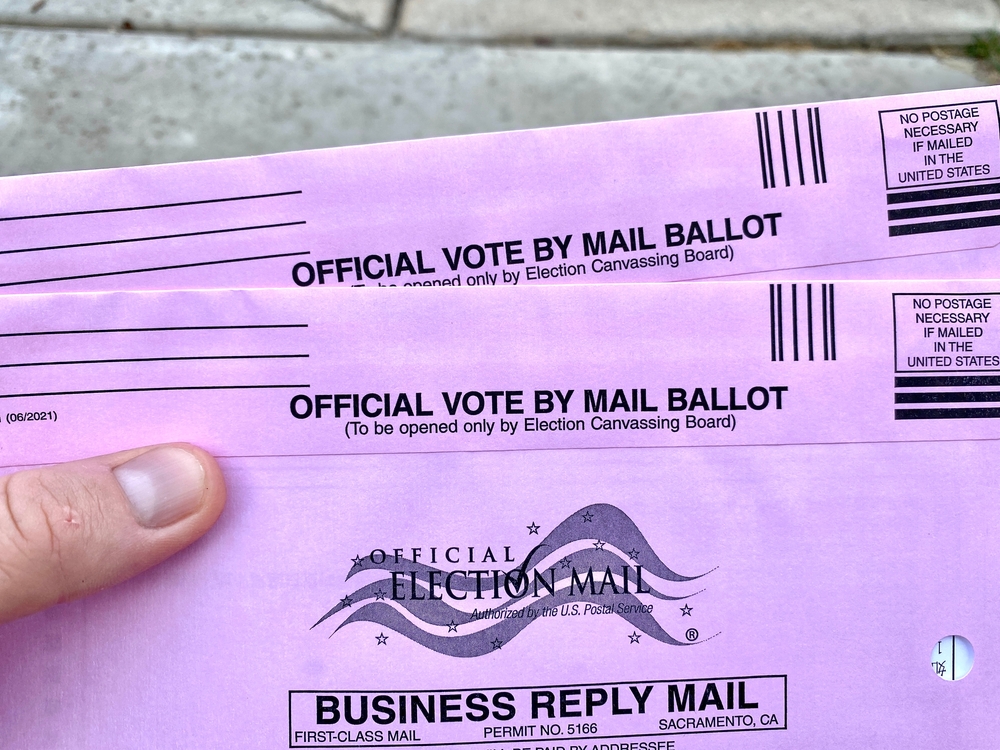
The mail preparation standards include printing an Election Mail Logo on the ballot envelope, which would identify it to voters and Postal Service employees. The Postal Service already uses what it calls “extraordinary measures” to speed election mail faster than normal mail. The Logo will enable employees to identify mail ballots easily.
The rule requires that state ballot envelopes be “automation compatible.” This means that the ballot envelope must be of a size and composition that can be efficiently handled by Postal Service machinery without creating delays.
The Bad
The rule requires state election officials to provide the Postal Service with a “Mail-in and Absentee Participation List” containing the names and addresses of voters to whom they will mail a ballot, along with a unique barcode applied to the outbound and return ballot mail envelope. State election officials must certify that any mail ballots they provide to voters will be processed this way. If a state fails to certify, the Postal Service will not carry that state’s ballots through the mail.
The Postal Service seems committed to this bullying. Postmaster General Steiner told a Senate Homeland Security Committee hearing on June 24, 2026, that the Postal Service wouldn’t mail ballots from a state that had not provided a voter “manifest.” Enormous harm would occur if a state’s mail ballots were refused by the Postal Service. For example, in West Virginia mail-in voters are not permitted to return their ballot by dropbox or at a polling site.
Additionally, the proposed rule would have a chilling, voter suppression effect. The rule is clear – its purpose is to aid law enforcement in preventing non-citizens from voting. It would enable the federal government to connect a ballot with a particular voter for the first time. After the voting concludes, the Postal Service would share information on who voted by mail with DHS and other law enforcement agencies, enabling them to hunt down non-citizen voters.
Voters whose citizenship status has only recently been conferred will hesitate to vote for fear of legal consequences. And what about the risk for citizens who incorrectly appear in government records as non-citizens? Many recent immigrants are already anxious about engagement with government processes. The rule inevitably will lead some completely lawful citizen-voters to skip voting. Perhaps this is its purpose.
The rule will result in litigation, which will further complicate and cloud the mid-term elections in November. What’s more, states will be hard-pressed to comply with mandated ballot design changes and list certification rules. Many states have already purchased mail ballot envelopes for the 2026 federal election cycle that do not comply with the requirements contained in the rule. State funds are not budgeted for last-minute ballot changes.
The rule contains time deadlines for various steps. If the rule is final by July 29, 2026, states may notify the Postal Service by August 5, 2026, of their intention to use mail ballots, and must provide their Mail-in and Absentee Participation List by September 4, 2026. What could possibly go wrong?
This Postal Service rule, proposed mere months before a major federal election, will so obviously create chaos, thousands of opportunities for inadvertent noncompliance, and uncertainty about election results that these collateral effects must have been contemplated, or even desired.
The Illegal
Under the Constitution’s Election Clause, states regulate the “times, places and manner” of holding federal elections. The “manner” of holding elections includes things like notices, registration, supervision of voting, protection of voters, prevention of fraud and corruption, counting of votes, and publicizing election results. The Constitution does not grant the President or any executive agency the power to manage elections in any way. So there is a substantial, unresolved question about whether the Executive Order, and the Postal Service’s proposed rule based on it, are lawful.
The first litigation results are in. The U.S. District Court in Massachusetts declared portions of the EO, including the portion directing the Postal Service to adopt a new rule, as ultra vires and unconstitutional, violating both the separation of powers and the Constitution’s Election Clause. This order applies only to the November 2026 mid-term elections.
The Court noted that the Constitution does not grant the President any specific powers over elections. To the extent he tries to meddle in elections through an EO, these efforts are beyond his authority. The court further ruled that states, not Congress or the President, have the power to determine voter eligibility, and no law delegates authority to control mail voting to the Postal Service.
A second federal court has also found the proposed rule to be illegal, but for different reasons. The U.S. District Court in Washington, D.C., ruled on July 1, 2026, that the proposed rule violated a settlement agreement between the Postal Service and the NAACP in litigation concerning the 2020 Presidential election.
Back then, the Postal Service had adopted practices for handling election mail during the Pandemic that resulted in significant nationwide delivery delays. The settlement agreement required the Postal Service to “prioritize . . . timely delivery of election mail.” The court ruled that the Postal Service could not comply with the agreement if it adopted the proposed rule requiring it to refuse election mail not in compliance with the rule’s requirements.
Both cases will be appealed. The delays occasioned by the appeal of adverse rulings are simply part of the chaos caused by the EO and the Postal Service rule. Any sane approach to reforming election rules would be taken in a measured way that would not undermine the elections themselves. But undermining confidence in the mid-term elections is part of Trump’s strategy to discredit the embarrassing loss he is expecting.

