
The Tick Timebomb
I have just returned from a visit with old friends on the island of Nantucket in Massachusetts. The island is beautiful, but with terrain and vegetation much different than ours in West Virginia. Unfortunately, Nantucket residents are under attack from ticks. The extent of the problem has led to an outbreak of disease, and a change in lifestyle for many residents who were formerly active outdoors but now fear contracting one of several diseases spread by ticks. All this has led me to wonder about our tick situation in the Mountain State.
The most common tick-borne illness is Lyme disease, which can affect many body systems. It is hard to diagnose because Lyme symptoms overlap with those of other infections and autoimmune conditions. Even after treatment, up to 20% of patients may develop chronic Lyme-associated conditions with persistent fatigue, pain, cognitive issues, and neurological complications. If diagnosed early, Lyme disease can generally be cured by a dose of doxycycline or amoxicillin.
West Virginia Lyme disease cases have quadrupled from 1,000 per year in 2020 to 4,000 in 2025. Cases are on track to exceed 4,000 this year. Reported cases are heaviest in the Eastern Panhandle counties, but the black-legged deer tick that carries the bacteria is found throughout the state.
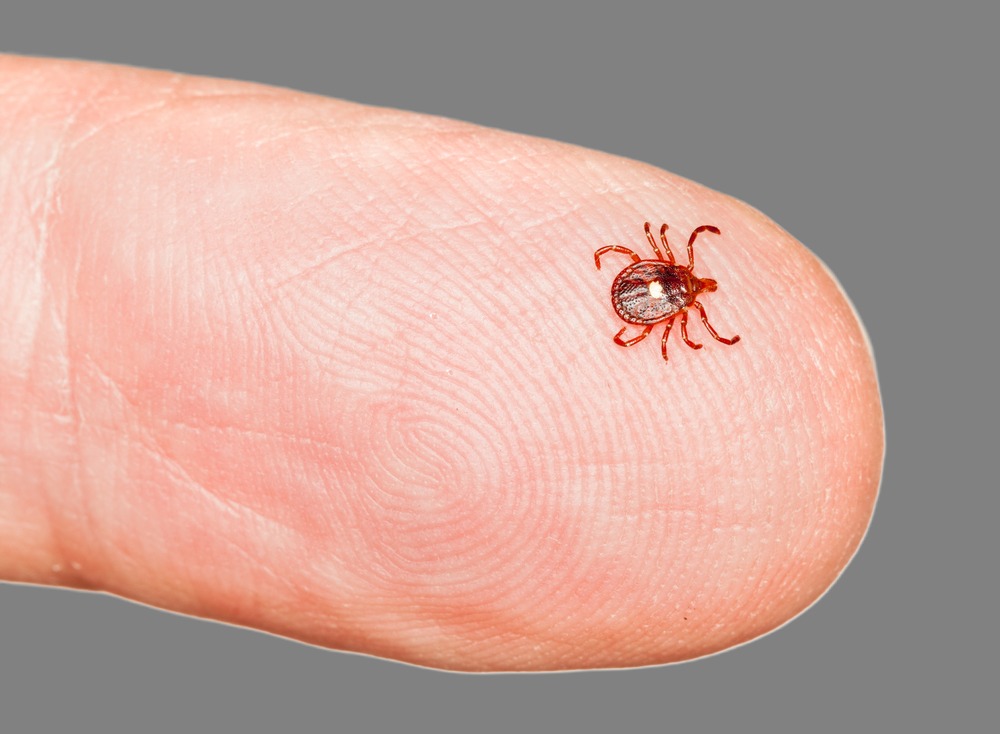
A second, more troubling disease called alpha-gal syndrome is getting a lot of attention these days. Alpha-gal is a sugar molecule found in most mammals, but not in humans. The Lone Star tick is the vector for this disease. These ticks are also found throughout the state, but the highest numbers have been found in Putnam, Jackson, Cabell, Kanawha, and Wayne counties. When the tick bites, its saliva deposits the alpha-gal molecule into the human victim.
Some, but not all, people who get this tick bite produce antibodies that overreact, attacking the alpha-gal molecule as an invader. Multiple tick bites increase the reaction. Thereafter, sufferers from alpha-gal syndrome have a strong autoimmune reaction when they eat red meat of any kind. Some can’t even touch a product containing animal protein. In rural communities, alpha-gal doesn’t just attack the body, it changes a way of life – interfering with farming, hunting, and raising animals.
In late 2025, there were 185 confirmed cases of alpha-gal syndrome in West Virginia. Cases are reported to the Department of Health, but not to CDC. In 2026, a bill was introduced in the West Virginia Legislature requiring the Department of Health to report cases to CDC, but, after unanimously passing the Senate, it failed to pass the House of Delegates.
We’ve always had ticks in West Virginia. But maybe you’ve noticed they’re worse now. You aren’t imagining it. There are more ticks these days, and they are showing up earlier in the spring and dying off later in the fall. The culprit? Climate change. As climate change brings warmer spring temperatures and milder autumns to the northeastern United States, deer ticks are emerging earlier and feeding longer.
What is the solution for this? The United States now has some thirty-six million deer wandering the forests and our backyards, like a “fleet of mobile blood banks” for ticks. Some people think that culling the deer population – eating our way out of the problem — is the solution. Scientists disagree. Deer are not infected, they are merely the hosts for the ticks that are. Severely culling deer herds on isolated islands has successfully reduced disease, but in non-isolated areas, killing deer simply drives the ticks to other deer or to other animal hosts.
Two West Virginia county health departments are offering doxycycline, which will prevent the development of Lyme disease if taken within 72 hours of the tick bite. Doxycycline can also treat ehrlichiosis, a disease carried by the black-legged tick and the Lone Star tick. But the antibiotic will not prevent the onset of alpha-gal syndrome.
In May 2026, HHS announced a series of major initiatives to strengthen the nation’s response to Lyme disease and other tick-borne diseases. This includes a multi-million-dollar pilot program in tick control, incentive prizes for innovation, and up to $2.5 million for NIH researchers to combat alpha-gal syndrome.
But a vaccine is not among the measures advanced by HHS. Early vaccines for Lyme disease have had mixed results. In March 2026, Pfizer announced plans to file for regulatory approval of a Lyme disease vaccine that would be the first on the market in over two decades. Approval of Pfizer’s vaccine may face challenges from HHS Secretary Robert F. Kennedy Jr.
Kennedy has embraced both anti-vaccine views and conspiracy theories, including that Lyme disease is a bioweapon engineered at the Plum Island Animal Disease Center, a U.S. government facility. This wacky idea cannot be squared with the fact that the Lyme-causing bacteria have existed for hundreds of thousands of years and the tick has existed largely in its present form for millions of years.
When it comes to our health, we need rigorous science, not bizarre conspiracy theories. Unfortunately, we may have to wait until after the 2028 election for the proper approach to be restored at HHS. In the meantime, here in West Virginia we need to be vigilant to look for ticks and tick bites when in tick-infested areas, and avoid those areas when we can.

